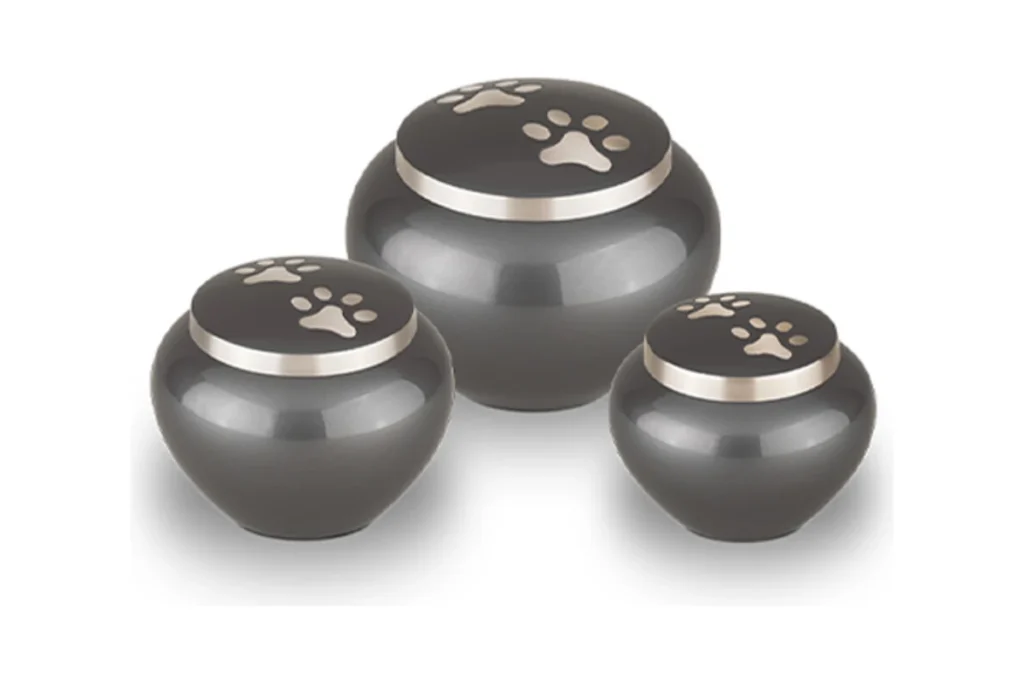
Choosing an urn for a much-loved pet is a personal and often emotional decision. One of the most common questions we’re asked is simply, “What size urn will I need?” This guide explains how to estimate the volume of your pet’s ashes, how to read urn capacities, and what to do if you’re unsure, so you can choose a resting place that feels right.
Getting Started
The Simple Rule of Thumb
Urn sizes are based on volume rather than weight. The guideline most widely used by crematoria and urn makers is that each pound (lb) of your pet’s healthy body weight produces roughly one cubic inch of ashes.
In metric terms, that works out at around 0.036 litres of ashes for every kilogram of body weight. A 10 kg dog, for example, will usually produce around 0.36 litres of ashes.
Tip: Use your pet’s normal, healthy adult weight rather than their weight at the end of their life. Then choose an urn with a little more capacity than your estimate. Ashes volume varies with bone density, breed and age, so some breathing room is reassuring.
Every urn in our pet urns collection lists its capacity in litres on the product page, so you can compare your estimate directly.
At a Glance
Pet Urn Size Chart by Weight
Use this chart as a starting point. The suggested capacity includes a small margin so the ashes fit comfortably.
| Pet’s healthy weight | Typical examples | Approx. ashes | Suggested urn capacity |
|---|---|---|---|
| Up to 5 kg | Most cats, rabbits, toy dog breeds | Up to 0.18 L | 0.35 L or more |
| 5 – 10 kg | Larger cats, Jack Russell, Dachshund | 0.18 – 0.36 L | 0.45 L or more |
| 10 – 20 kg | Cocker Spaniel, Beagle, Border Collie | 0.36 – 0.72 L | 0.7 – 0.9 L |
| 20 – 30 kg | Springer Spaniel, smaller Labradors | 0.72 – 1.08 L | 1.2 – 1.4 L |
| 30 – 40 kg | Labrador, Golden Retriever, German Shepherd | 1.08 – 1.44 L | 1.5 – 1.6 L |
| 40 – 50 kg | Larger retrievers and working breeds | 1.44 – 1.8 L | 1.9 L or more |
| Over 50 kg | Giant breeds | 1.8 L + | Consider an adult-sized urn |
For very large dogs, many families choose from our cremation urns, which offer capacities of 3 litres and above. Our cremation urn size guide explains those larger sizes in more detail.
For Cats
What Size Urn Does a Cat Need?
Most adult cats weigh between 3.5 kg and 5.5 kg, which usually produces less than 0.2 litres of ashes. In practice, a small pet urn of around 0.35 – 0.5 litres will comfortably hold the ashes of almost any cat, including larger breeds such as Maine Coons.
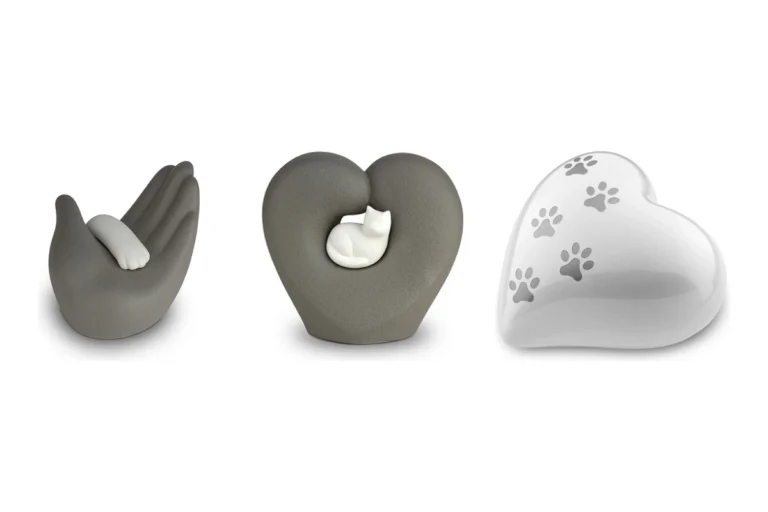
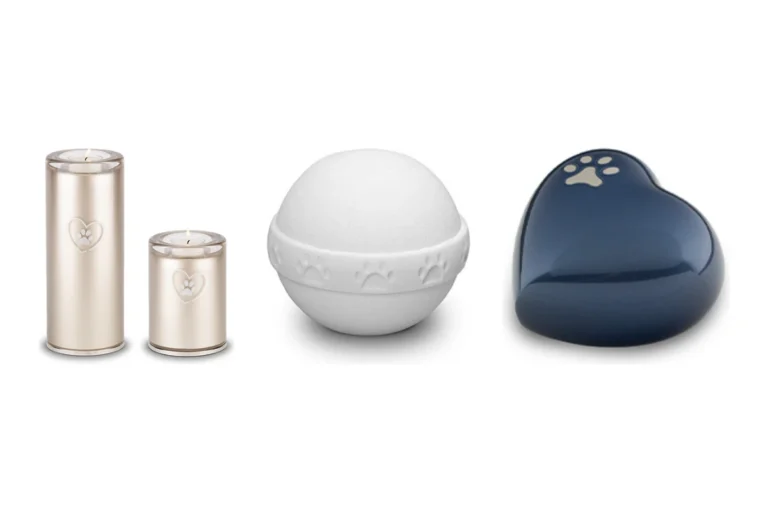
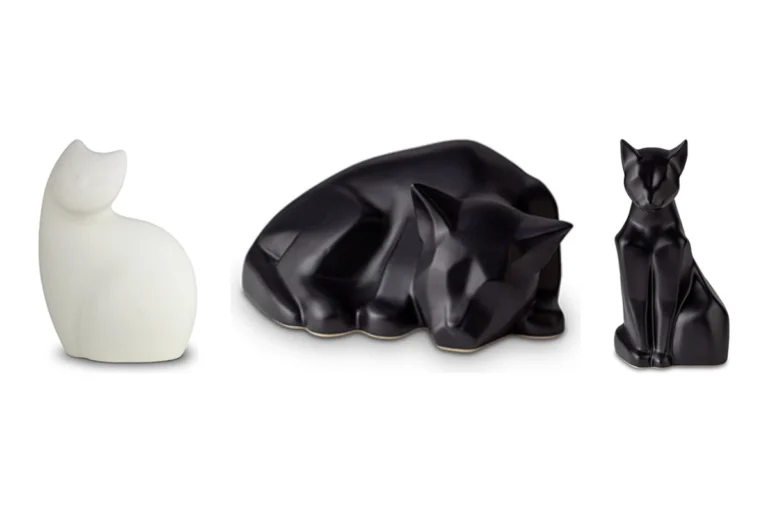
Because cat ashes take up so little space, you have a wide choice of designs, from sculpted figures to heart-shaped urns. You can browse every design made for cats in our cat urns for ashes collection, or read our guide to choosing an urn for your cat.
For Dogs
What Size Urn Does a Dog Need?
Dogs vary far more in size, so it’s worth working out an estimate. As a guide:
- Small dogs (up to 10 kg): a small urn of 0.45 litres is usually ample.
- Medium dogs (10 – 25 kg): look for around 0.7 – 1.0 litres.
- Large dogs (25 – 40 kg): look for 1.2 – 1.6 litres.
- Very large dogs (40 kg +): choose 1.9 litres or more, or an adult-sized urn.
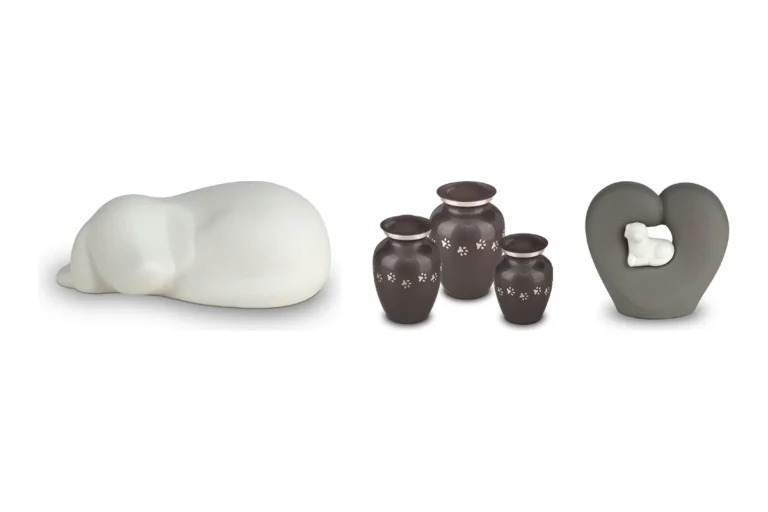
Many of our designs come in small, medium and large sizes, so you can keep the style you love and simply pick the capacity you need. See our full range of dog urns for ashes, or our guide to choosing an urn for your dog.
 Metal Pet Urn with Paw Print LidView urn →
 Traditional Paw Print Pet Urn for Ashes – Brown (Dogs & Cats)View urn →
 Porcelain Paw in Hand Pet UrnView urn →
Other Options
If You’re Unsure, or Want to Share Ashes
If you don’t know your pet’s weight, or simply want certainty, the pet crematorium can usually tell you the volume of ashes when they are returned. Some families wait until then before choosing an urn, and that’s perfectly fine.
Choosing a size is also about how you’d like to remember your pet:
- Keeping all of the ashes together: choose an urn with capacity a little above your estimate.
- Sharing between family members: a keepsake urn of 0.08 – 0.1 litres holds a small, symbolic portion for each person.
- Scattering or burying some ashes: a smaller urn or keepsake can hold what you’d like to keep at home. Our guide to what to do with your pet’s ashes has more ideas.
 Heart Pet Urn with Single Paw PrintView urn →
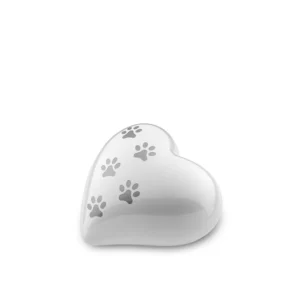 Heart-Shaped Pet Urn for Ashes with Paw PrintView urn →
 Crystal Paw Prints Pet UrnView urn →
Questions
Frequently Asked Questions
How many litres of ashes does a dog produce?
Roughly 0.036 litres per kilogram of healthy body weight. That’s about 0.36 litres for a 10 kg dog, 0.9 litres for a 25 kg dog and 1.4 litres for a 40 kg dog.
Is it better to choose a bigger urn?
Yes, if in doubt. A little spare capacity is better than an urn that’s too small. The ashes are normally returned in a sealed bag, which can be placed straight into most urns.
Can I fit my pet’s ashes into a keepsake urn?
A keepsake is designed for a small, symbolic amount, usually less than 0.1 litres. It may hold all the ashes of a very small pet such as a hamster or bird, but for cats and dogs it’s normally used alongside a main urn or after scattering.
Do you deliver pet urns across the UK?
Yes. You can find delivery details on our delivery and collection page, or collect from one of our branches.
Need help choosing a size?
Our team has decades of experience in funeral care and is happy to help.